

Maker Rebates
A rebate returns part of the taker's fee to the maker whose limit order was executed. This encourages limit orders and improves order book liquidity.
How It Works
When your limit order is executed, you act as a maker by adding liquidity to the order book. The other party, the taker, removes that liquidity and pays a fee. Part of the taker's fee is returned to you as a rebate.
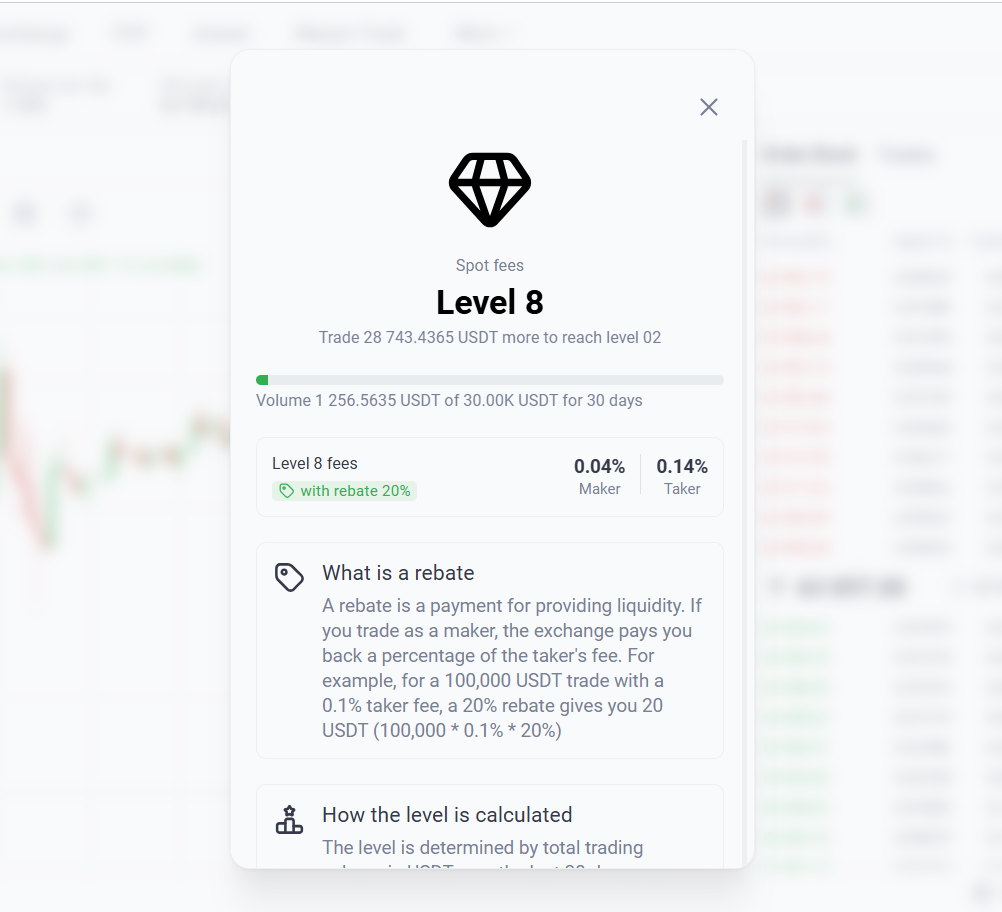
The rebate is credited in the same currency in which the taker's fee was charged.
Where It Is Credited
The rebate is credited to the bonus (referral) account and is not combined with your trading balance. It appears as a separate entry in the transaction history.
What Determines the Rate
- Fee schedule tier — The higher your 30-day trading volume, the better the maker terms. The current schedule is available in the Trading Fees article.
- Personal rate — Some clients may receive an individual rebate rate agreed with their manager.
Eligibility Requirements
| Requirement | Explanation |
|---|---|
| Verification completed | Rebates are credited only to users with confirmed KYC |
| Taker fee > 0 | If the taker paid no fee for the trade, there is no rebate |
| The taker is not an exchange market maker | Trades against the exchange's market-making bot are excluded |
Rebates and the Referral Program
The rebate and referral reward are two consecutive deductions from the same taker fee. The maker rebate is credited first, and the referral bonus is calculated from the remainder.
Referral Bonus = Remainder × Referral Rate
Both payments go to bonus accounts: the rebate to the maker and the referral bonus to the user who invited the trader.