

Spot Trading
Spot is the simplest way to trade cryptocurrency: you buy actual coins that are credited directly to your balance.
How it works
In spot trading, you exchange one asset directly for another. Buy BTC with USDT and the BTC appears in your balance; sell it and you receive USDT back. There are no contracts, leverage, or liquidation.
A Market order executes immediately at the best available order book price. With a Limit order, you set the price and the order waits in the book until it can execute.
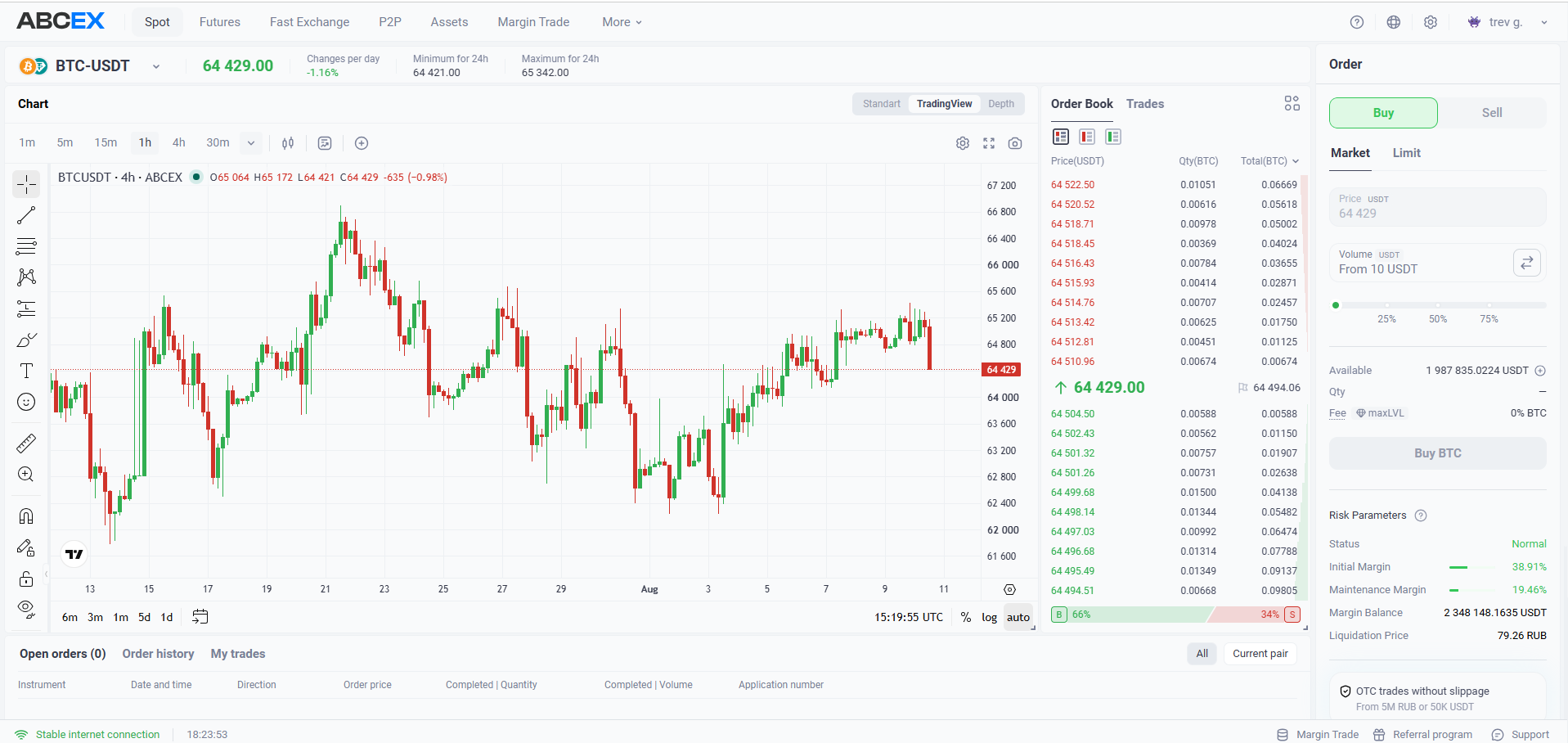
Market order
Enter the quantity and the exchange executes the trade at the best currently available price. This is the fastest way to enter or exit a position, and the taker fee applies.
With a large order or low liquidity, the average execution price may be worse than the price initially displayed. Consider using a limit order for larger amounts.
Limit order
You specify a price and the order waits in the order book until the market reaches it. The maker fee applies and is lower than the taker fee.
Market vs Limit: when to use what
| Parameter | Market | Limit |
|---|---|---|
| Speed | Immediate | When the target price is reached |
| Price control | No | Full |
| Performance guarantee | Yes | No |
| Fee | Taker (higher) | Maker (lower) |
| When to use | Urgency needed | Entry price is important |
If you are not in a hurry, use limit orders. Pay as a maker (below) and choose the exact entry price.
Frequently asked questions
A limit order is executed only when the market reaches your price. If the price does not reach, the order will hang. You can cancel it manually in the Open Orders section.
This is slippage. With a market order, the exchange takes the best available prices from the order book - if the volume is large, part of the order is executed at less favorable prices. For an accurate entry, use a limit order.